ECR EGTC Welcomes DG MOVE Delegation to Joint Roadside Enforcement in Belgium
Representatives of the European Commission joined ECR EGTC for a roadside inspection visit in Ruisbroek, Belgium, where VLABEL and the Belgian Federal Police demonstrated multidisciplinary road transport enforcement in practice.
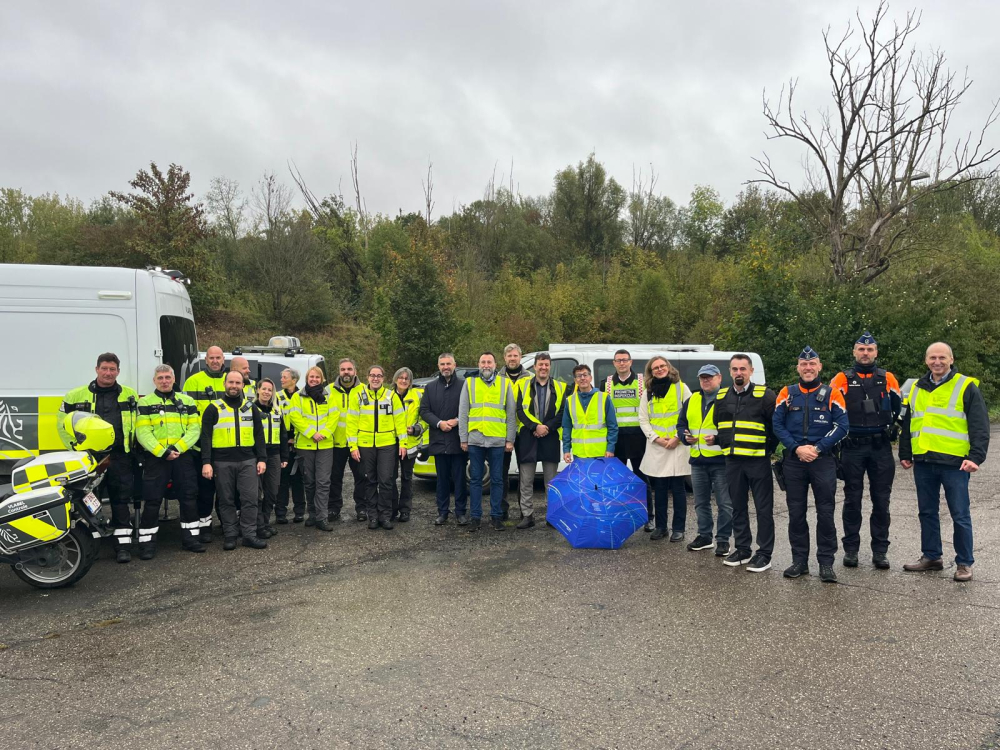
On 9 October 2026, Euro Contrôle Route European Grouping of Territorial Cooperation (ECR EGTC) welcomed a delegation from the European Commission's Directorate-General for Mobility and Transport (DG MOVE) to a roadside enforcement operation in Ruisbroek, Belgium. The inspections took place along the E19 motorway towards Brussels and were carried out by the VLABEL Control Service, part of the Flemish Tax Administration (Vlaamse Belastingdienst), in cooperation with the Belgian Federal Police. Taking place during ECR EGTC's Coordinated Control Weeks, the visit provided an opportunity to demonstrate national roadside enforcement practices and strengthen dialogue between European institutions and enforcement authorities.
The DG MOVE delegation was led by Frédéric Versini, Head of Unit C1 (Road Transport), and joined by representatives of ECR EGTC, including its Director, Heinz-Albert Stumpen. The visit brought together European institutional representatives and Belgian enforcement authorities, providing an opportunity for direct exchange on the practical implementation of European road transport legislation.
The purpose of the visit was to offer European institutional representatives a direct view of the technical, operational and legal aspects of roadside enforcement. While European legislation establishes common requirements for road transport, its practical application depends on the work of national authorities, including the selection of vehicles, examination of documentation, assessment of vehicle compliance and identification of infringements. The Ruisbroek operation provided an opportunity to observe these procedures and discuss the challenges encountered by inspectors in their daily work.
Multidisciplinary Roadside Inspections at Ruisbroek
The operation began with an early-morning briefing for the inspection teams, followed by the start of roadside controls at 08:00. By 09:00, the inspection site was fully operational for the official visit, which continued until approximately midday. Inspectors from VLABEL and the Belgian Federal Police combined expertise across several areas of road transport enforcement, demonstrating how different inspection disciplines can be brought together during a single roadside operation.
The checks covered driving and resting time requirements, tachograph compliance, transport authorisations, vehicle mass and dimensions, technical roadworthiness, cargo securing and exceptional transport. Compliance with the Agreement concerning the International Carriage of Dangerous Goods by Road (ADR) was also examined where relevant. This multidisciplinary approach allowed inspectors to assess different aspects of compliance and identify infringements relating to both the vehicle and the transport operation. It also illustrated how cooperation between enforcement services with complementary responsibilities can support comprehensive roadside inspections.
The visit offered the DG MOVE delegation an opportunity to observe the practical circumstances in which inspectors operate, including the interpretation of technical information, the assessment of potentially complex infringements and the application of national enforcement procedures. The involvement of VLABEL and the Belgian Federal Police highlighted the importance of effective coordination between authorities, particularly when a single transport operation may involve several regulatory requirements.
Inspection Results Across Several Enforcement Areas
Following the operation, VLABEL shared the results of the roadside checks conducted at Ruisbroek. The participating teams recorded 20 infringements across the different inspection categories, together with six warnings. The financial amounts associated with the recorded infringements totalled €34,105, reflecting the range of compliance issues identified during the operation.
Driving and resting time compliance was one of the areas examined, resulting in three infringements associated with €8,734. Inspectors also recorded two infringements concerning transport authorisations, associated with €3,480. These findings underline the importance of ensuring compliance with European social legislation and the requirements governing the authorisation of road transport operations.
Vehicle mass and technical requirements represented another significant part of the inspection activity. Twelve vehicles were checked for mass compliance, resulting in four infringements associated with €11,500 and one warning. Technical inspections covered 21 vehicles, with six infringements associated with €4,866 and two warnings. A further infringement specifically concerning tachograph equipment was recorded, associated with €1,320. These findings illustrate the range of technical and operational requirements that may be assessed during roadside enforcement activities.
The operation also covered dangerous goods transport, cargo securing and exceptional transport. In the area of ADR compliance, seven vehicles were inspected, resulting in one infringement associated with €550. Cargo securing checks covered six vehicles, with inspectors identifying one infringement associated with €1,000 and issuing three warnings. In addition, three vehicles were checked for exceptional transport requirements, resulting in two infringements associated with €2,655.
Taken together, the findings demonstrate the variety of issues that can be identified during multidisciplinary roadside controls. They also illustrate the importance of cooperation between different inspection services when assessing complex transport operations. As vehicles may be subject to checks in more than one category, the individual inspection figures should not be added together to determine the total number of distinct vehicles inspected. Similarly, the financial amounts represent sanctions associated with the recorded infringements, rather than confirmation of payments collected during the operation.
Connecting European Policy with Operational Experience
An important aspect of the Ruisbroek visit was the opportunity to strengthen dialogue between European institutions and national enforcement authorities. European legislation in the field of road transport addresses a wide range of subjects, including driving and resting times, tachograph requirements, technical vehicle conditions, transport authorisations and road safety. Its effective implementation depends on the ability of inspectors to apply these requirements consistently while responding to the practical challenges encountered during roadside checks.
By observing a multidisciplinary enforcement operation, the DG MOVE delegation was able to gain insight into the procedures, technical considerations and operational coordination involved in national road transport inspections. Such exchanges help connect European transport policy with its practical enforcement, while providing opportunities to discuss challenges and share operational experience directly with national authorities.
For ECR EGTC, the visit highlighted the important role played by its participating enforcement authorities in implementing European road transport legislation. Through its network, the organisation facilitates the exchange of expertise, cooperation between national services and dialogue with European institutions on matters of common enforcement interest. The Ruisbroek operation provided a practical example of this cooperation, bringing together national inspectors and European institutional representatives around shared road transport enforcement objectives.
The visit also took place during ECR EGTC's Coordinated Control Weeks of 5–10 October 2026, when participating national authorities conducted activities around shared enforcement priorities. These coordinated campaigns complement ECR EGTC's inspector exchanges, technical workshops and Expert Group activities by allowing national services to focus on common subjects while applying their own enforcement procedures. The experience gained through these activities contributes to identifying recurring compliance challenges and supporting future technical cooperation across Europe.
Strengthening Cooperation Between European Institutions and Enforcement Authorities
The Ruisbroek operation highlighted the importance of maintaining close cooperation between European institutions and national enforcement authorities. By bringing together DG MOVE, ECR EGTC, VLABEL and the Belgian Federal Police, the visit provided valuable insight into the practical challenges of roadside enforcement and demonstrated the benefits of combining different areas of expertise.
ECR EGTC extends its sincere appreciation to VLABEL and the Belgian Federal Police for organising and carrying out the operation, as well as to the DG MOVE delegation for their participation and engagement. Particular thanks go to all participating inspectors and representatives for their professionalism, cooperation and contribution to the exchange.
Through its Coordinated Control Weeks, Expert Groups and continued cooperation with national and European authorities, ECR EGTC remains committed to strengthening practical enforcement cooperation, improving road safety, protecting drivers' working conditions and supporting fair competition across Europe's road transport sector.
12/10/2026 - 11:00