ACE II 2026 Strengthens European Cooperation on Dangerous Goods Enforcement in the Czech Republic
The second ADR Cross-Border Enforcement activity of 2026 brought European inspectors together in Plzeň, Czech Republic, where 56 dangerous goods transport units were inspected and ADR infringements were identified in 17 of them.
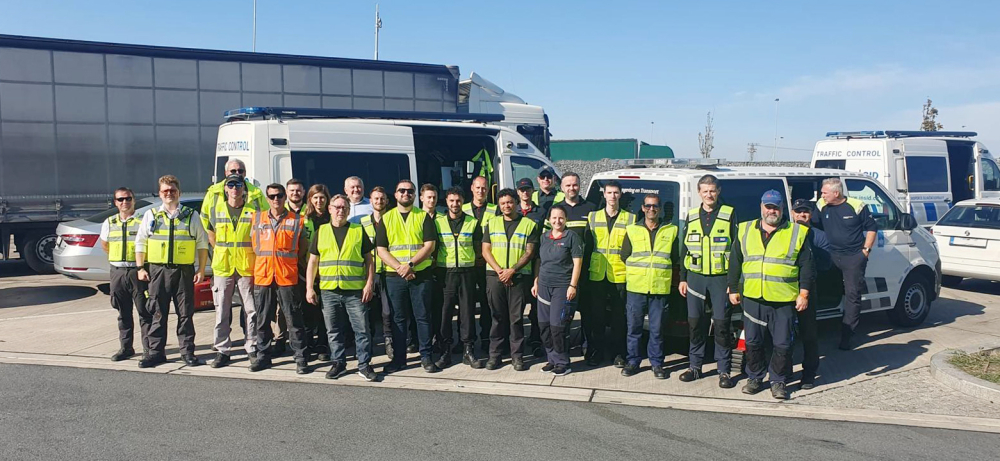
From 5 to 8 October 2026, the second ADR Cross-Border Enforcement (ACE II) activity of the year took place in Plzeň (Pilsen), Czech Republic. Organised by the Czech Road Transport Inspection (INSID) within the framework of the ECR EGTC ADR Expert Group, the event brought together enforcement professionals from across Europe to exchange knowledge and strengthen cooperation in the enforcement of the Agreement concerning the International Carriage of Dangerous Goods by Road (ADR). The activity involved 21 participants from outside the Czech Republic, including the ECR EGTC Director, alongside Czech inspectors and organising personnel. The international delegation included representatives from Belgium, France, Germany, Luxembourg, the Netherlands, Poland, Portugal and Romania.
The programme combined technical discussions and professional exchanges with two days of practical roadside inspections, providing participants with an opportunity to observe different enforcement approaches and apply ADR provisions in an operational environment. The joint checks took place on 6 and 7 October along the D5 motorway near Plzeň, Czech Republic. Working alongside their Czech colleagues, the international inspectors examined dangerous goods transport operations and exchanged experience on vehicle documentation, safety equipment, cargo securing, identification requirements and the interpretation of ADR regulations.
Roadside Inspection Results and Main Findings
During the two days of roadside inspections, 56 ADR transport units were checked, comprising three units transporting dangerous goods in bulk, 21 tank transport units and 32 units carrying dangerous goods in packages. ADR infringements were identified in 17 of the 56 transport units, representing approximately 30.4% of those inspected. The inspections covered different types of dangerous goods transport and identified several recurring areas of non-compliance.
According to the final results shared by INSID, the most frequent infringements concerned the inadequate securing of packages on vehicle loading areas. Proper cargo securing is particularly important in dangerous goods transport, where incorrectly restrained or insufficiently protected packages can present significant risks during sudden braking, vehicle manoeuvres or road incidents. The findings demonstrated the importance of examining not only whether dangerous goods are correctly classified and documented, but also whether they are physically secured and transported in accordance with the applicable safety requirements.
Other frequently identified deficiencies related to transport documentation, fire extinguishers and mandatory vehicle equipment. Inspectors found cases involving incorrectly completed transport documents, missing items of equipment and deficiencies in the fire extinguishers carried by vehicles. Further findings included missing instructions in writing or difficulties understanding them, deficiencies in ADR certificates of approval, insufficiently closed packages, incorrect or missing UN numbers and hazard labels, and damaged or improperly secured orange-coloured identification plates. In one case, the inspection teams also identified a technical defect that was not directly related to ADR compliance.
The variety of findings highlighted the importance of a comprehensive inspection approach, combining checks of transport documents, vehicle approval and equipment with the physical condition, marking and securing of dangerous goods. These different inspection elements are closely connected, and weaknesses in any one of them can affect the safety of a transport operation. The results also provided a practical basis for discussion among participating inspectors, allowing them to compare how similar deficiencies are identified, assessed and addressed within their respective national enforcement systems.
Strengthening Cooperation Through Practical Enforcement
Beyond the inspection results, ACE II provided an opportunity for enforcement professionals from different European countries to work together, exchange technical expertise and improve their understanding of national inspection practices. Although ADR establishes a common international regulatory framework for the transport of dangerous goods by road, enforcement authorities operate within different national administrative and legal systems. Joint activities therefore offer particular value by allowing inspectors to compare their methods, discuss complex situations encountered during roadside controls and develop professional contacts that can support future cooperation.
The practical format of ACE II also enabled participants to share experience on the challenges associated with international dangerous goods transport. Vehicles and consignments frequently travel through several countries, making effective enforcement dependent not only on knowledge of ADR provisions but also on cooperation between the authorities responsible for applying them. By bringing inspectors together in a shared operational environment, the exchange contributed to strengthening technical knowledge, mutual understanding and the consistency of enforcement approaches.
The activity formed part of ECR EGTC's wider programme of dangerous goods enforcement cooperation in 2026. Earlier in the year, the first ADR Cross-Border Enforcement activity took place in Rotterdam, the Netherlands, while the annual ADR Expert Class in Schlüchtern, Germany, provided further opportunities for advanced technical training and knowledge exchange. Together, these initiatives demonstrate the complementary role of specialised training and practical roadside operations in supporting the work of the ECR EGTC ADR Expert Group.
The Plzeň exchange highlighted the value of sustained cooperation between European enforcement authorities in addressing common challenges in dangerous goods transport. ECR EGTC extends its appreciation to INSID and the Czech organising team for hosting and coordinating the activity, and to all participating inspectors and authorities for their professionalism, expertise and active contribution throughout the programme. Through its ADR Expert Group and joint enforcement initiatives, ECR EGTC continues to support the effective application of ADR regulations, improved road safety and closer cooperation between European enforcement authorities.
09/10/2026 - 11:00