ADR Expert Class 2026 Strengthens Cooperation on Dangerous Goods Transport Enforcement
The annual ADR Expert Class brought together 18 enforcement specialists from ten European countries for advanced technical training, practical case studies and the exchange of experience on dangerous goods transport enforcement.
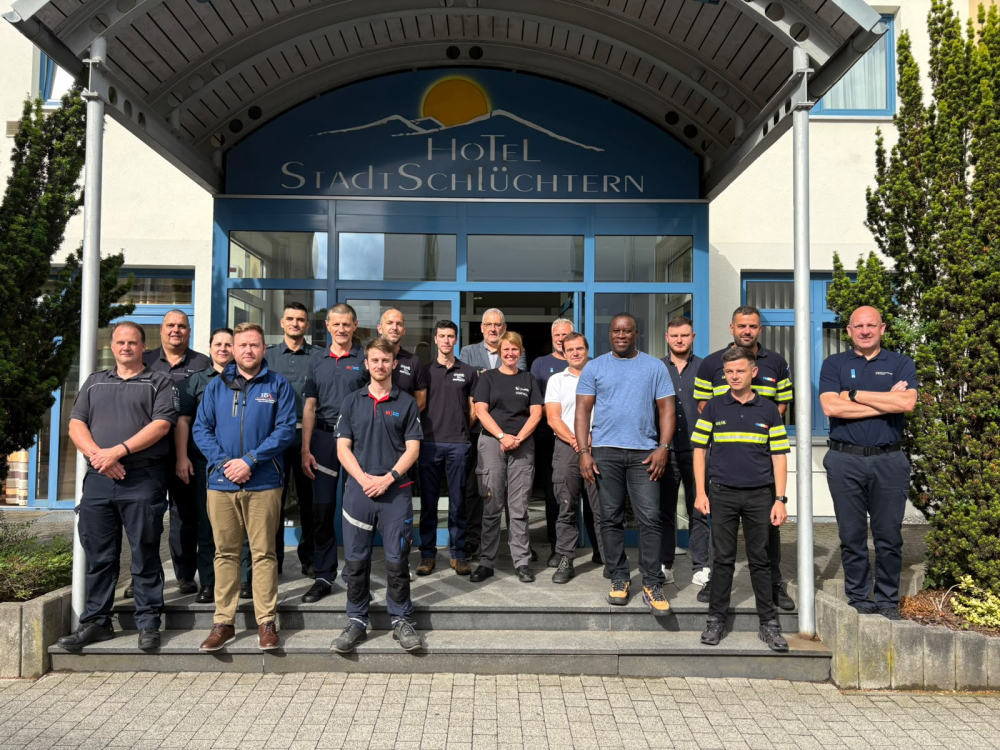
From 29 June to 3 July 2026, the ADR Expert Class took place in Schlüchtern, Germany, organised by the German Federal Office for Logistics and Mobility (BALM) within the framework of the ECR EGTC ADR Expert Group. The activity brought together 18 enforcement specialists from Belgium, Czech Republic, France, Germany, Ireland, Luxembourg, the Netherlands, Poland, Portugal and Romania. Over the course of the week, participants exchanged technical knowledge, practical experience and national inspection practices concerning the application and enforcement of the Agreement concerning the International Carriage of Dangerous Goods by Road (ADR).
The Expert Class provides an opportunity for enforcement professionals from different European countries to examine the practical interpretation of ADR provisions and discuss challenges encountered during roadside inspections. By combining technical presentations, group exercises, case studies and professional exchange, the programme allows participants to develop their knowledge while comparing the approaches used by national enforcement authorities. This is particularly relevant in international dangerous goods transport, where vehicles and consignments frequently cross several borders and may be inspected by authorities operating within different national enforcement systems.
Exchanging Technical Knowledge and Roadside Inspection Experience
A traditional element of the Expert Class was the ADR knowledge test, consisting of 32 questions at the level required to become a dangerous goods safety adviser. The exercise challenged participants to demonstrate a detailed understanding of ADR provisions and their practical application. Representatives from Belgium and Portugal achieved the highest results in this year's test, reflecting the advanced level of expertise brought together during the programme.
A significant part of the training focused on classification questions involving renewable energy systems, lithium batteries, other battery technologies and equipment containing batteries. These subjects are becoming increasingly important for enforcement authorities as new energy technologies are introduced across different areas of transport and industry. Participants worked in multinational groups to examine practical cases, identify the relevant ADR provisions and develop appropriate classification approaches. Their conclusions were presented through step-by-step explanations, encouraging discussion of the methods used and providing opportunities to compare national interpretations of complex regulatory requirements.
The programme also addressed the over-classification of waste, allowing participants to examine situations in which the classification applied to a waste consignment may be more restrictive than required by ADR. These discussions contributed to a broader exchange on roadside inspection practices and the application of the revised checklist introduced through Commission Delegated Directive (EU) 2025/1801. Participants considered how the updated European framework for roadside checks on dangerous goods transport may influence inspection procedures, the identification of infringements and the assessment of compliance across participating countries.
By examining these subjects through practical examples, the Expert Class connected regulatory knowledge with the operational situations faced by inspectors. The discussions highlighted the importance of understanding not only the requirements established by ADR, but also how they should be interpreted and applied when examining transport documentation, identifying dangerous goods, assessing packaging and evaluating vehicle compliance during roadside inspections.
Preparing for New Technologies and Regulatory Developments
Developments in vehicle technology and alternative propulsion systems formed another important part of the programme. A presentation entitled New Alternative Propulsion Technologies, delivered by a representative of Daimler Truck AG, examined emerging propulsion technologies and their relationship to the construction and approval requirements set out in Chapter 9 of ADR. The presentation provided participants with technical insight into the design and construction of vehicles used for dangerous goods transport and the implications of technological developments for future inspections. The combination of technical and regulatory information was particularly appreciated by the participants.
This forward-looking perspective continued through a presentation on the principal changes expected under ADR 2027, which is scheduled to take effect on 1 January 2027. Participants examined upcoming developments in the regulatory framework and discussed their implications for enforcement authorities. Including these subjects in the programme helped inspectors prepare for changes that may affect the classification, transport and inspection of dangerous goods in the coming years.
The Expert Class also identified an opportunity for further practical cooperation concerning the inspection of fire extinguishers carried on vehicles transporting dangerous goods. Participating countries were invited to provide examples and photographs illustrating the different inspection-date and expiry-date markings used nationally. This material will contribute to the development of a practical reference document designed to assist inspectors in recognising and interpreting marking formats encountered during roadside checks. The initiative demonstrates how exchanges within the ADR Expert Group can lead to practical resources that support inspectors in their daily enforcement activities.
Strengthening European Cooperation in Dangerous Goods Enforcement
The ADR Expert Class 2026 demonstrated the importance of maintaining close cooperation between national enforcement authorities in a field that continues to evolve through technological developments and changes in international regulations. The discussions concerning batteries, waste classification, roadside inspection requirements, alternative propulsion technologies and ADR 2027 highlighted the need for inspectors to maintain specialised technical knowledge and exchange experience on subjects of common operational importance.
By bringing together specialists from ten countries, the programme provided opportunities to compare national enforcement practices, discuss complex regulatory questions and develop a shared understanding of the challenges associated with dangerous goods transport. The practical exercises and follow-up initiatives also illustrated the value of translating technical knowledge into resources and inspection approaches that can support more effective enforcement across Europe.
ECR EGTC extends its sincere appreciation to BALM and the ADR Expert Group for organising the Expert Class, and to all participating specialists, trainers and contributors for their expertise and active engagement throughout the programme. Through continued training, technical exchange and practical cooperation, ECR EGTC remains committed to strengthening dangerous goods transport enforcement, improving road safety and supporting the protection of inspectors, the public and the environment across Europe.
10/07/2026 - 08:52