ECR EGTC and ELA Strengthen Cross-Border Enforcement Cooperation During DRT Workshops in Poland
From 21 to 23 April 2026, Poland hosted international workshops and pilot enforcement activities dedicated to driving times, breaks and rest periods in road transport. Organised by the General Inspectorate of Road Transport (GITD) in cooperation with Euro Contrôle Route EGTC and the European Labour Authority, the initiative represented an important step towards strengthening coordinated enforcement of EU social legislation in road transport across Europe.
The workshops formed part of the activities of the Driving and Resting Times (DRT) Expert Group of Euro Contrôle Route EGTC and brought together representatives of enforcement authorities from 11 European countries. Participating countries included Poland, Germany, France, the Netherlands, Luxembourg, Portugal, Ireland, the Czech Republic, Romania, Croatia and Lithuania. The event created an important platform for exchanging operational experience, discussing enforcement challenges and reinforcing practical cooperation between national control authorities.
The opening session was attended by Marek Konkolewski, Acting Deputy General Inspector of Road Transport in Poland, and Heinz Albert Stumpen, Director of Euro Contrôle Route EGTC. The substantive programme of the workshops was coordinated by Rogier Kemeling, Chair of the DRT Expert Group, together with Daria Gackowska from the Regional Inspectorate of Road Transport in Bydgoszcz, acting as Deputy Chair.
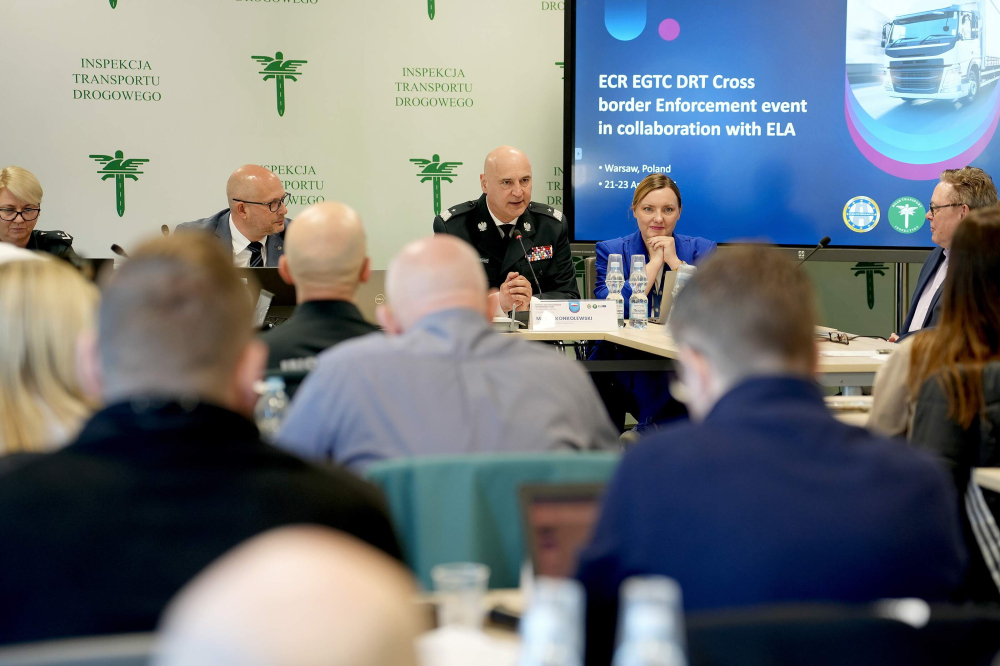
The programme combined expert discussions with operational roadside enforcement activities, enabling participants not only to exchange knowledge but also to test cross-border cooperation mechanisms in practice. Discussions focused on the enforcement of EU social legislation in road transport, including driving and resting times, posting of drivers, cabotage operations, tachograph manipulation and the use of modern enforcement technologies such as Dedicated Short-Range Communication (DSRC) systems.
Particular attention was also given to upcoming regulatory developments linked to the Mobility Package, including the extension of certain social rules from 1 July 2026 to light commercial vehicles engaged in international transport. The workshops therefore served as both an operational and strategic forum for preparing enforcement authorities for future legislative changes.
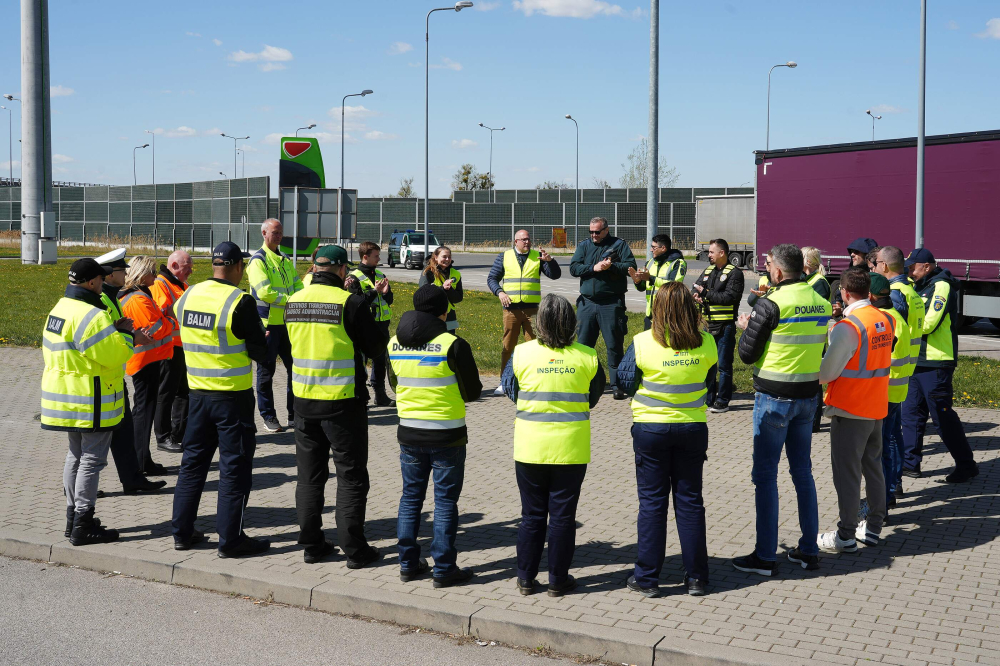
As part of the joint enforcement activities carried out during the initiative, authorities inspected a total of 33 vehicles registered in several European countries, including Lithuania, Latvia, Ukraine, the Czech Republic, Slovakia, Estonia, Romania, Bulgaria and Poland. The controls resulted in 17 proceedings being initiated against transport undertakings for infringements amounting to approximately PLN 17,000. In addition, fines imposed directly on drivers totalled PLN 2,550, while one separate proceeding related to the failure to declare the posting of a driver amounted to PLN 6,000.
The inspections identified several recurring infringements related to compliance with EU social legislation. These included failures to download data from tachographs and driver cards within the legally required timeframes, reductions of daily and weekly rest periods, and cases of exceeding the maximum permitted driving time over a two-week period. Enforcement officers also detected improper use of tachograph mode switches as well as missing permits for transport operations involving third countries transiting through Poland.
A particularly significant aspect of the initiative was the joint operational involvement of Euro Contrôle Route EGTC and the European Labour Authority in roadside enforcement activities. This marked the first time both organisations cooperated directly in practical operational controls, giving the initiative a pilot and pioneering dimension within the framework of European road transport enforcement cooperation.
The outcomes of the workshops and roadside checks demonstrate the added value of coordinated European enforcement activities. Joint actions not only strengthen compliance with EU legislation but also contribute to greater harmonisation, improved exchange of expertise and more effective enforcement across borders. Such cooperation remains essential for ensuring fair competition, protecting drivers’ working conditions and enhancing road safety throughout the European Union.
As European road transport legislation continues to evolve, initiatives such as the DRT workshops in Poland underline the importance of operational cooperation between national enforcement authorities and European institutions in building a more coherent and effective enforcement framework for the future.
07/05/2026 - 10:06