First ACE 2026 in Rotterdam Advances ADR Cross-Border Enforcement and European Cooperation
From 30 March to 2 April 2026, ACE 2026 1 – ADR Cross-Border Enforcement, the first ADR roadside inspection activity of the year, was carried out in Rotterdam, the Netherlands. The activity was organised by the Inspectie Leefomgeving en Transport (ILT) within the framework of the ECR EGTC ADR Expert Group, bringing together European enforcement authorities for a joint operational exchange in one of Europe’s busiest regions for the transport of dangerous goods.
Rotterdam, as a major logistics and industrial hub, provided a highly suitable environment for ADR roadside inspections. The activity combined practical enforcement with cross-border cooperation, enabling inspectors to operate in realistic and complex conditions while exchanging expertise and contributing to more harmonised approaches to ADR compliance.
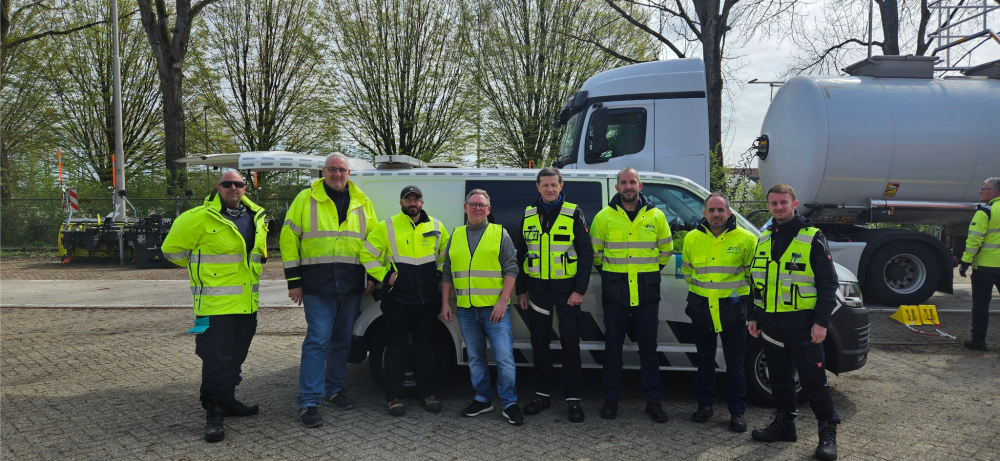
A total of 23 inspectors from across Europe participated in the activity, representing the Netherlands as host nation, alongside Germany, France, the Czech Republic, Poland, Ireland, Portugal and Luxembourg. This broad participation reflects a shared European commitment to improving ADR roadside inspection practices and strengthening cooperation between enforcement authorities.
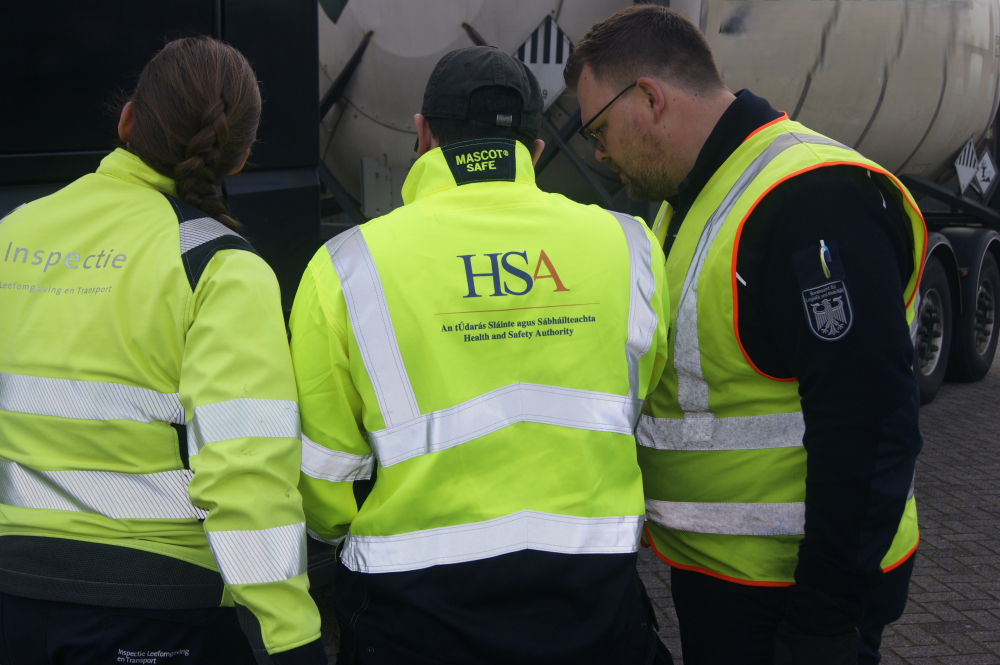
The programme began on Monday evening with a technical briefing, followed by a welcome address by Mr Paul Weststeijn, Head of the Department for the Supervision of Hazardous Substances at ILT. This introduction provided the framework for a practical and collaborative activity focused on operational effectiveness, inspector safety and knowledge exchange.
On Tuesday, inspections were carried out at the Tweedweg site in Rotterdam. The location provided a complex operational environment, situated within an industrial area surrounded by chemical companies, heavily trafficked national roads and railway lines used for the transport of dangerous goods. For many participants, this setting offered direct insight into ADR roadside inspections under high-risk, real-world conditions.
The second operational day took place at the Rijkswaterstaat location in Moerdijk, where the innovative use of technology formed a central part of the programme. The ECR EGTC Director and Secretariat Advisor were also in attendance, contributing to the exchange between participating authorities. The Aerosensing team demonstrated the use of drones to support inspection activities, showing how inspections can be carried out effectively without the need to physically access tanks, vehicles or containers. This approach highlighted how modern tools can enhance both safety and efficiency, while reducing exposure to risk.
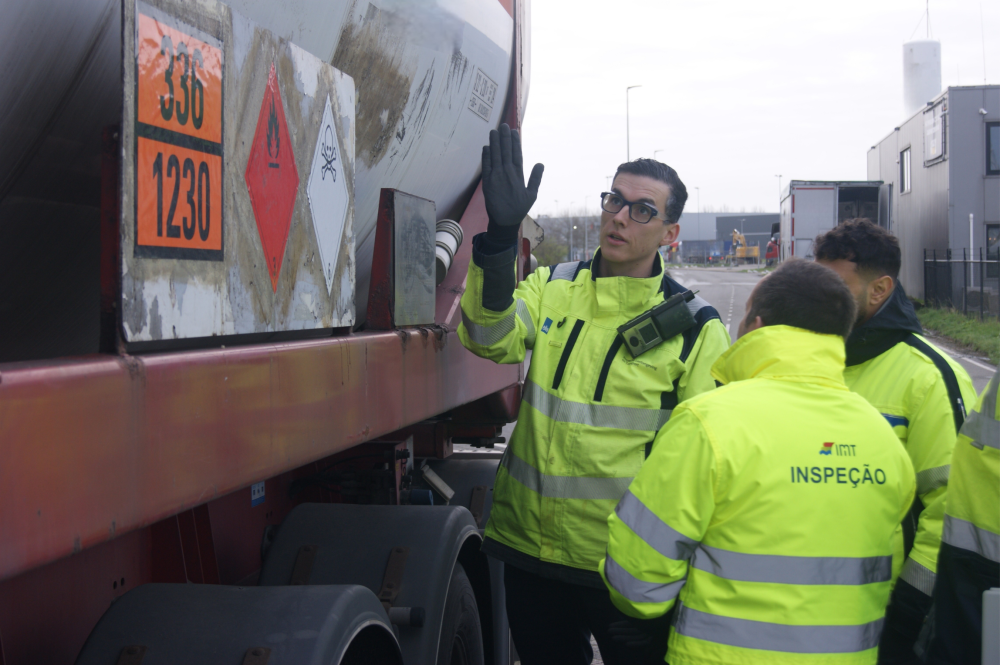
Feedback from participants underlined the value of the activity. Inspectors noted the structured approach, resources and expertise applied during the inspections and highlighted the importance of learning directly from colleagues in other countries. The joint inspections enabled participants to identify methods and practices that can be applied in their own national contexts, reinforcing the practical benefit of cross-border cooperation.
Inspector safety emerged as a key theme throughout the activity. Participants observed that in many countries, inspections are still carried out with limited protective equipment, typically consisting of high-visibility clothing and basic safety footwear. This contrasts with the Dutch approach, where inspectors are equipped with fire-resistant, electrically resistant and chemically resistant protective clothing, as well as gloves, masks, breathing apparatus and specialised detection equipment. The use of MX 5 meters, which contribute both to personal safety and leak detection, attracted particular interest and highlighted the importance of integrating safety into enforcement practices.
The activity also reinforced the importance of building professional networks across borders. Participants emphasised that direct contact between enforcement authorities is essential for effective cooperation, including in cases requiring follow-up actions involving companies operating in different countries. At the same time, discussions highlighted the need to further strengthen the legal and practical framework for cross-border information exchange.
The operational results of ACE 2026 illustrate the effectiveness of this coordinated approach. During the activity, 36 vehicles were inspected, of which 26 vehicles, representing 72%, were found to be in violation, with a total of 43 ADR infringements identified. In addition, three violations related to other legislation, including technical requirements and EVOA rules, were recorded. Six official reports were issued, accounting for 23% of cases, while the remaining infringements resulted in warnings. Two loads were returned to the loading address and blocked, while the other deficiencies were rectified on site.
When compared with national figures from the Netherlands in 2025, where 54% of inspected vehicles were found to be in violation, and 19% resulted in official reports, the higher detection rate during ACE 2026 demonstrates the added value of multilateral inspections. The combination of expertise within joint inspection teams contributes to a more comprehensive detection of non-compliance and supports more effective enforcement outcomes.
ACE 2026 in Rotterdam confirms the importance of coordinated European enforcement in the field of dangerous goods transport. By bringing together inspectors, operational experience and innovative approaches within the ECR EGTC framework, the activity contributes to improving road safety, enhancing compliance with ADR rules and ensuring a high level of protection for inspectors, the public and the environment across Europe.
07/04/2026 - 13:00